
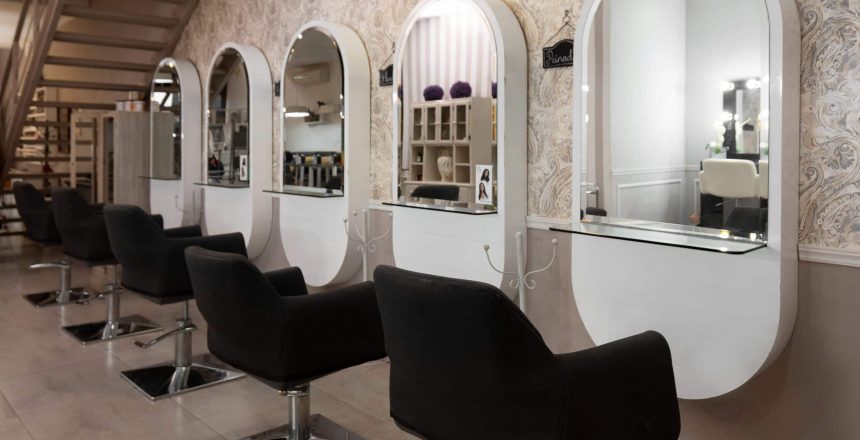
A full diary looks like a healthy business. But what happens when one of those appointments disappears at the last minute?
For salons, barbers and other appointment-led businesses, a no-show is more than an inconvenience. The chair is empty, the staff member is still being paid, and the opportunity to serve another customer has disappeared. This is the same in hospitality, where a no-show can leave a table empty during a busy service, reduce takings and prevent another customer from being seated.
The result is a hidden cost that can quietly eat into cash flow: the no-show tax.
The good news is that businesses don’t have to just accept it. A clear deposit and cancellation policy, timely reminders and the right payment technology can turn missed appointments from a recurring problem into a manageable business cost.
The real cost of an empty seat
The easiest way to understand the impact of no-shows is to think about the lost opportunity cost.
Imagine a barber charges £35 for a 60-minute appointment. Or a salon charges £150 for a 3 hours appointment.
If a customer doesn’t turn up and the slot cannot be filled last minute, the business then lose the potential revenue. Now imagine this happens:
2 missed salon appointments a week
£150 average appointment value
48 trading weeks a year
That’s £14,400 in potential annual revenue disappearing from the diary.
And the cost can be even higher when you consider salaries, rent, utilities and other overheads that continue regardless of whether the customer arrives.
The important point is that the empty chair can’t be sold retrospectively. Once the appointment time has passed, that revenue opportunity is gone. A walk-in may coincidentally come in at the right time, but this can never be guaranteed to happen, nor generate the same amount of revenue.
Don’t think of a cancellation policy as a penalty
A cancellation policy shouldn’t be about punishing customers. It is about protecting a business’s time.
Your appointment slots are inventory. A barber’s 10am slot, a stylist’s Saturday afternoon appointment or a restaurant’s six-person table all have a finite value. If a customer cancels with enough notice, that inventory can potentially be sold again.
If they cancel five minutes before the appointment, or simply don’t turn up, the business may have no realistic opportunity to recover the revenue.
That’s why a well-designed policy should make three things clear:
How much notice customers need to give when cancelling or changing an appointment.
Whether a deposit is required.
What happens when a customer cancels late or doesn’t attend.
The simpler the policy, the easier it is for staff to enforce consistently.
The deposit is about commitment, not punishment
One of the most effective ways to reduce no-shows is to take a deposit when the appointment is booked.
For example, a salon could ask for a £25 deposit on a £150 treatment.
The customer still has £125 to pay after the appointment, but they have now committed money to the booking.
Deposits can be particularly useful for:
High-value salon treatments
Colour appointments
Longer barber appointments
Beauty treatments
Bridal and special-event bookings
Appointments requiring multiple members of staff
- Limited availability dining events
Peak-time and weekend slots
Businesses can also use different deposit levels depending on the service. A 30-minute haircut might require no deposit, while a three-hour colour appointment could require a large one.
The important thing is to communicate the policy before the customer confirms the booking.
Make the cancellation window reasonable
A cancellation policy works best when it is clear and proportionate.
For example:
Standard appointments:
Cancel or rearrange at least 24 hours before the appointment.
Late cancellation:
A deposit may be retained if the appointment is cancelled inside the 24-hour window.
No-show:
The deposit is retained, and repeated no-shows may require full prepayment for future bookings.
The exact policy should reflect your business, service type and customer expectations.
It is also worth checking that your policy is communicated clearly and is consistent with applicable consumer and contract rules.
The biggest mistake: having a policy customers forget
Even a brilliant cancellation policy won’t help if customers don’t remember their appointment.
That’s where reminders matter.
CreatePay Touch includes appointment-booking functionality and automated SMS reminders, helping businesses remind customers ahead of scheduled appointments. This can reduce the simple “I completely forgot” no-show and gives customers an opportunity to rearrange before the slot is lost.
A practical reminder sequence might look like:
At booking:
“Your appointment is confirmed for Tuesday 18 August at 2:00pm.”
24 hours before:
“Reminder: you have an appointment with [Business] tomorrow at 2:00pm. Please contact us as soon as possible if you need to cancel or rearrange.”
On the day:
“Your appointment with [Business] is today at 2:00pm. We look forward to seeing you.”
The goal isn’t to bombard customers. It is to make remembering and managing an appointment easy.
CreatePay Touch: bringing bookings and payments together
For salons, barbers and other service businesses, payment technology can play a much bigger role than simply taking a card payment at the end of an appointment.
CreatePay Touch combines a portable card machine with EPOS functionality, giving businesses a single device for payment processing and business management. It can manage products, sales, stock, suppliers, reporting and appointments, while supporting contactless, Chip & PIN and mobile wallet payments.
For an appointment-led business, that can mean less jumping between systems, and an easier customer journey.
You can manage appointments, keep track of your team, process the customer’s final card payment and review business information through one connected setup.
CreatePay Touch also supports Wi-Fi and 4G connectivity, so the device can be used around the business rather than being permanently tied to a traditional till position.
That portability can be useful in a salon or barbershop where staff may need to take payment at different stations.
A portable EPOS can do more than take card payments
The value of a modern portable EPOS isn’t just portability.
For salons and F+B businesses, it can help connect several parts of the customer journey:
Booking → reminder → appointment → service → payment → reporting
CreatePay Touch offers appointment management, staff timekeeping, product and stock management, sales reporting and payment processing in one system.
That matters because the more disconnected systems a business uses, the more likely information gets lost between them.
A business owner should be able to answer simple questions such as:
How many appointments did we have this week?
How many were cancelled?
How many were no-shows?
Which services generate the most revenue?
Which staff members are busiest?
How much did we take in card payments?
Are sales increasing or falling?
Good reporting turns no-shows from an annoyance into something you can actually measure.
Don’t just reduce no-shows. Recover the empty slot.
Even with deposits and SMS reminders, cancellations will happen.
The next step is having a plan for recovering the appointment.
Create a simple “last-minute list” of customers who are happy to take an earlier appointment.
When someone cancels:
1. Contact customers on the waiting list.
2. Offer the newly available slot.
3. Promote last-minute availability through your social channels.
4. Give staff visibility of the empty appointment.
5. Track how often cancelled slots are successfully rebooked.
This changes the equation.
Instead of:
Cancellation = £0
you may achieve:
Cancellation → reminder → waiting-list customer → recovered appointment → revenue retained.
Don’t forget the cash-flow side
Reducing no-shows protects revenue, but businesses also need to think about when money reaches the bank.
CreatePay offers next-working-day settlement for eligible merchants, helping businesses get access to card-payment funds quickly.
For a small business, faster access to card-payment revenue can help with everyday cash-flow demands such as wages, suppliers, stock and bills.
And if a business needs additional capital for growth or working capital, Create Funding provides access to funding offers from 2 UK providers. Funding options range from £1,000 to £1 million, with eligibility and terms depending on your business.
For example, a growing salon might use additional finance to invest in new equipment, refurbish its premises or expand its offering rather than allowing short-term cash-flow pressure to delay the investment.
Cancellation Policy Template
Here’s a simple starting point businesses can adapt:
Our Cancellation Policy
We understand that plans can change. If you need to cancel or rearrange your appointment, please give us at least 24 hours’ notice.
Appointments cancelled with less than 24 hours’ notice may result in your deposit being retained.
If you do not attend your appointment, your deposit may be retained and we may require payment in advance for future bookings.
We send appointment reminders to help you remember your booking. If you need to make a change, please contact us as soon as possible.
Thank you for respecting our team’s time and helping us keep appointments available for all our customers.
The no-show tax is measurable
The best way to start tackling the problem is to put a number on it.
Track:
Average appointment value × missed appointments × average time per appointment = potential revenue lost
Then take recovery into account.
For example:
£50 average appointment
× 4 missed appointments per week
= £200 potential revenue lost per week
That’s: £800+ per month or roughly £10,400 per year before considering any appointments you successfully refill.
We also provide a Salon No-Show Cost Calculator that allows businesses to enter their appointment value, booking volume, no-show rate, late-cancellation rate, rebooking rate and deposit policy to estimate the financial impact.
Once you know the number, the conversation changes.
You’re no longer asking, “Are no-shows a problem?”
You’re asking:
“What would it be worth to reduce them by 25%, 50% or 75%?”
A simple no-show protection strategy
For salons, barbers and F+B businesses with bookings, the answer doesn’t have to be complicated.
Take deposits where the risk justifies it.
Make the cancellation window clear.
Send automated SMS reminders.
Make last-minute availability easy to fill.
Track no-shows and late cancellations.
Use your EPOS and payment data to understand what is happening.
Review your policy regularly.
With CreatePay Touch, businesses can combine a card payment solution and portable EPOS with appointment management, SMS reminders, reporting and other operational tools.
The objective isn’t to make customers feel unwelcome. It’s to make sure that when someone books your time, that booking has value.
Because an empty chair, an unused appointment or an unfilled table isn’t just a quiet hour.
It’s revenue that your business had an opportunity to earn.